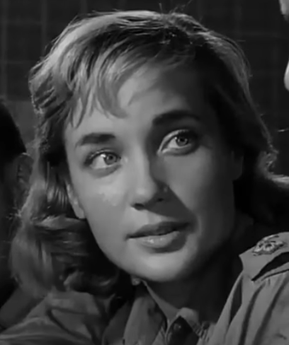
Sylvia Syms: A Versatile British Star's Six-Decade Legacy
In the constellation of British acting talent, few stars shone with the consistent versatility and quiet power of Sylvia Syms. With a career spanning over six remarkable decades, Syms established herself as a quintessential figure in British cinema, television, and theatre. From her striking debut in the mid-1950s to her later, nuanced supporting roles, she navigated the shifting tides of the entertainment industry with grace, often taking on challenging parts that mirrored and sometimes even pushed the boundaries of societal norms. Her legacy is not merely one of longevity but of profound impact, marking her as a truly versatile British star whose contributions resonate strongly in film history.
Early Life and a Dynamic Debut: Launching a British Icon
Born on January 6, 1934, in Woolwich, London, Sylvia Syms endured a childhood marked by the tumult of the Second World War. Experiences like evacuation and the profound loss of her mother to a brain tumour at the tender age of 12 undoubtedly shaped her resilience and emotional depth. This challenging start, however, forged an inner strength that would later define her compelling performances. Her path to stardom began with rigorous training at the prestigious Royal Academy of Dramatic Art (RADA), a common launchpad for many of Britain's finest actors, where she honed her craft and prepared for the spotlight.
Syms made an immediate and indelible impact on the British film scene with her 1956 debut in My Teenage Daughter. This film, often regarded as Britain’s answer to the American coming-of-age classic Rebel Without a Cause, saw her starring as a rebellious 17-year-old. Despite being 22 at the time, Syms radiated an authentic blend of defiance and vulnerability, perfectly capturing the angst of youth. Her portrayal of a daughter navigating a turbulent relationship with her widowed mother, played by Anna Neagle, left audiences and critics alike captivated. This breakthrough role served as a critical "passport" to a prolific career, showcasing her innate talent and promising a bright future in British cinema.
Versatility Personified: From Melodrama to War Epics
What truly set Sylvia Syms apart was her extraordinary versatility. Early in her career, she effortlessly transitioned across genres, excelling in everything from intense melodramas to romantic comedies and gritty war films. This adaptability quickly made her a sought-after talent. Her command of diverse roles was evident when she earned her first of three BAFTA Award nominations for her compelling performance in Woman in a Dressing Gown (1957). In this poignant drama, Syms played a secretary involved in an affair with an older, married man (Anthony Quayle), a role that bravely explored complex moral dilemmas and societal expectations of the era.
Perhaps one of her most iconic early roles came with top billing in the seminal war film Ice Cold in Alex (1958). Here, Syms took on the demanding role of a nurse, navigating the treacherous North African desert alongside British officers, including John Mills and Anthony Quayle, while escorting a medical unit and a suspected German spy during World War II. The film was remarkable for its time, affording a woman a starring role in what was typically a male-dominated genre. Filming in Libya was notoriously arduous, with Syms herself recalling primitive conditions: "There were holes in the ground for lavatories, and so many flies," she once quipped, adding a memorable detail, "We used DDT as hairspray." Such anecdotes highlight the dedication and resilience Syms brought to her craft, enduring challenging environments to deliver powerful performances.
Her early filmography further illustrates her extensive range, encompassing varied roles such as:
- A wife whose husband faces legal trouble in The Birthday Present (1957).
- Anne Wyndham, falling for a mysterious royalist in the civil war drama The Moonraker (1958).
- A Cambridge undergraduate in the romantic comedy Bachelor of Hearts (1958).
Confronting the Conventional: Brave Choices and Taboo-Breaking Roles
Beyond her talent for genre-hopping, Sylvia Syms distinguished herself through a willingness to tackle controversial and socially relevant subjects. Her career is dotted with roles that confronted the taboos of British society, showcasing a campaigning side and a refusal to shy away from difficult issues. Her performance in No Trees in the Street (1959) earned her a second BAFTA nomination, where she portrayed a sister in a grim urban drama, forced to make an unthinkable choice to save her tearaway brother from the gallows. This role, steeped in seduction, humiliation, and murder, showcased her ability to convey profound moral anguish.
Syms continued to embrace diverse and challenging parts, from a Soho stripper in the screen adaptation of the musical Expresso Bongo (1959), starring alongside Laurence Harvey and Cliff Richard, to an Italian nun in Conspiracy of Hearts (1960), and a banker's daughter entangled in a love triangle in The World of Suzie Wong (1960). Each role showcased a different facet of her acting prowess.
However, it was her fearless engagement with societal hot-button issues that truly underlined her unique place in British cinema. In Flame in the Streets (1961), Syms bravely took on the role of a young white woman planning to marry a West Indian man (Johnny Sekka). At a time when interracial relationships were still highly controversial in Britain, this film and her performance were groundbreaking. It offered a vital commentary on prejudice and integration, positioning Sylvia Syms as an actress willing to push boundaries and ignite crucial public discussions.
Even more remarkably, six years before homosexuality was decriminalized in Britain, Syms played a wife confronting the sexuality of her barrister husband. Such roles were not merely acting exercises; they were significant cultural interventions, reflecting Syms's commitment to portraying the complexities of human experience, even when those experiences challenged the prevailing social conservatism. For aspiring actors and filmmakers, Syms's choices offer a powerful lesson: impactful art often dares to confront, not just entertain.
Hollywood's Call and Personal Reflections
Despite her burgeoning success and critical acclaim in Britain, Sylvia Syms famously turned down a Hollywood contract early in her career. Her decision, revealed decades later, was deeply personal. She had married her childhood sweetheart, Alan Edney, in 1956, and felt she could not commit to the relentless pursuit of glamour and discipline that Hollywood demanded, citing stars like Joan Collins as examples. This choice highlights a fascinating aspect of her character: a prioritization of personal life and authenticity over the allure of international superstardom. Her rationale offers a unique perspective on an actress who valued substance over superficiality.
Looking back, Syms reflected with a touching honesty, "I wish I had known how beautiful I was when I was beautiful. I always saw other people as being much more glamorous than me." This candid insight offers a poignant glimpse into her self-perception, revealing a humility that belied her considerable talent and on-screen charisma. It reminds us that even celebrated figures grapple with self-doubt. Her decision to forgo Hollywood may have altered the trajectory of her international fame, but it solidified her status as a cherished British actress, enabling her to forge a career that was deeply rooted in the cultural landscape of her home country.
A Lasting Legacy
Sylvia Syms continued to work steadily throughout her life, gracing both the big and small screens with her presence well into her later years, taking on various supporting roles in acclaimed dramas. Her career, which concluded with her passing at the age of 89 on January 27, 2023, is a testament to her enduring talent and dedication. She left behind a rich filmography that serves as a captivating chronicle of British cinema's evolution, from post-war social realism to contemporary storytelling.
Her legacy extends beyond her performances; it lies in her integrity, her brave artistic choices, and her unwavering authenticity. For film enthusiasts, exploring Syms's body of work offers not just entertainment, but a valuable window into the social and cultural shifts of 20th-century Britain. For aspiring actors, her career stands as an inspiring example of the power of versatility, the courage to tackle challenging roles, and the importance of remaining true to one's values, even when the bright lights of Hollywood beckon.